Digital Literacy in Children
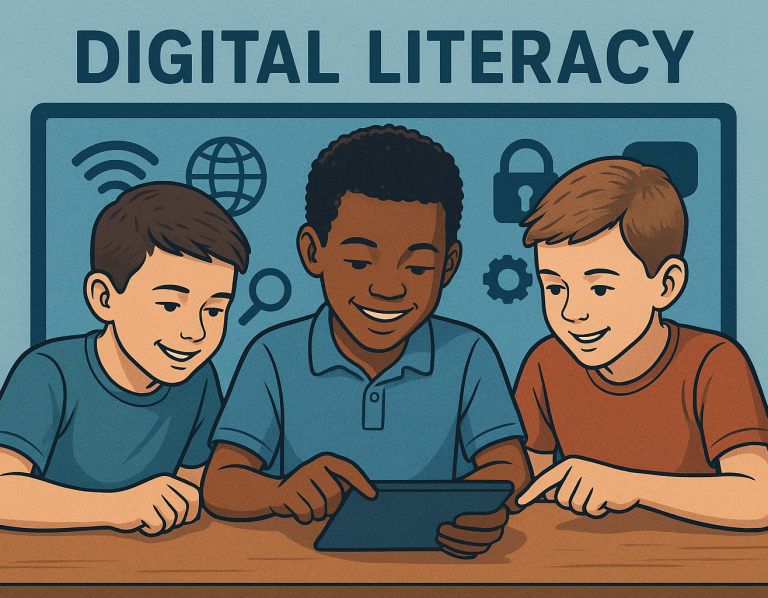
In today’s world, children are growing up surrounded by smartphones, tablets, computers, and the internet. While technology brings endless opportunities for learning and creativity, it also comes with challenges. This is where digital literacy becomes essential.
Digital literacy is not just about knowing how to use a device—it’s about understanding technology, using it responsibly, and developing critical thinking skills in the digital world. Let’s explore why it matters and how parents and educators can support children in becoming digitally literate.
What Is Digital Literacy?
Digital literacy is the ability to:
• Use technology effectively for communication, learning, and problem-solving.
• Evaluate information online for accuracy and reliability.
• Understand digital safety, privacy, and security.
• Create and share content responsibly and ethically.
Why Is Digital Literacy Important for Children?
1. Academic Success – Schools increasingly rely on digital tools. Strong digital skills help children research, complete assignments, and collaborate online.
2. Critical Thinking – Children learn to question what they read, recognize misinformation, and form their own opinions.
3. Safety & Privacy – With knowledge of online risks, children can protect themselves from cyberbullying, scams, or unsafe websites.
4. Future Skills – Most careers will require digital competence. Early learning prepares children for tomorrow’s workforce.
How to Improve Digital Literacy in Children
1. Teach Online Safety
Discuss the importance of strong passwords, safe sharing habits, and not talking to strangers online.
2. Encourage Critical Thinking
Show children how to check the source of information, compare multiple websites, and ask “Is this reliable?”
3. Promote Balance
Guide them to use technology as a tool for learning and creativity, not just entertainment. Encourage outdoor activities and offline hobbies.
4. Practice Responsible Sharing
Talk about the “digital footprint”, what children post online stays online. Teach respect and kindness in digital communication.
5. Be a Role Model
Children imitate what they see. Demonstrate healthy screen habits, fact-checking, and responsible use of technology